ATHLETE DEVELOPMENT
Developing athletes beyond the scoreboard.
Technical skill matters. So do judgment, preparation, resilience, independence and the ability to learn from experience.
OUR APPROACH
Good coaching should eventually make the athlete less dependent on the coach.
Athletes should increasingly understand what they are doing, why they are doing it and what to change when something is not working.
That does not happen through repetition alone. It takes explanation, application, deliberate practice, honest reflection and thoughtful correction.
The result matters. So does how the athlete gets there.
EVERYDAY LEARNING
The everyday learning cycle.
Understand: know the skill or correction and why it matters.
Apply: attempt it correctly with coaching.
Practice: repeat deliberately until it becomes more reliable.
Reflect: consider what happened and what was learned.
Improve: use that information to make a meaningful correction.
Repeat: return to the cycle with greater understanding and independence.
WHEN SOMETHING CHANGES
Narrow the problem before changing the answer.
A shot or group can change for more than one reason. Athletes learn to examine the situation systematically rather than make several random corrections at once.
Position & alignment
Has balance, natural alignment, body position or contact with the equipment changed?
Equipment fit & settings
Is the equipment set as expected, and does it still fit the position the athlete is using?
Shot process
What happened during aiming, trigger operation, follow-through and observation of the shot?
Focus & decisions
Was attention in the right place? Did pressure, frustration or an unnecessary change affect execution?
Preparation & conditions
Was something different about the firing point, routine, timing, lighting or competition environment?
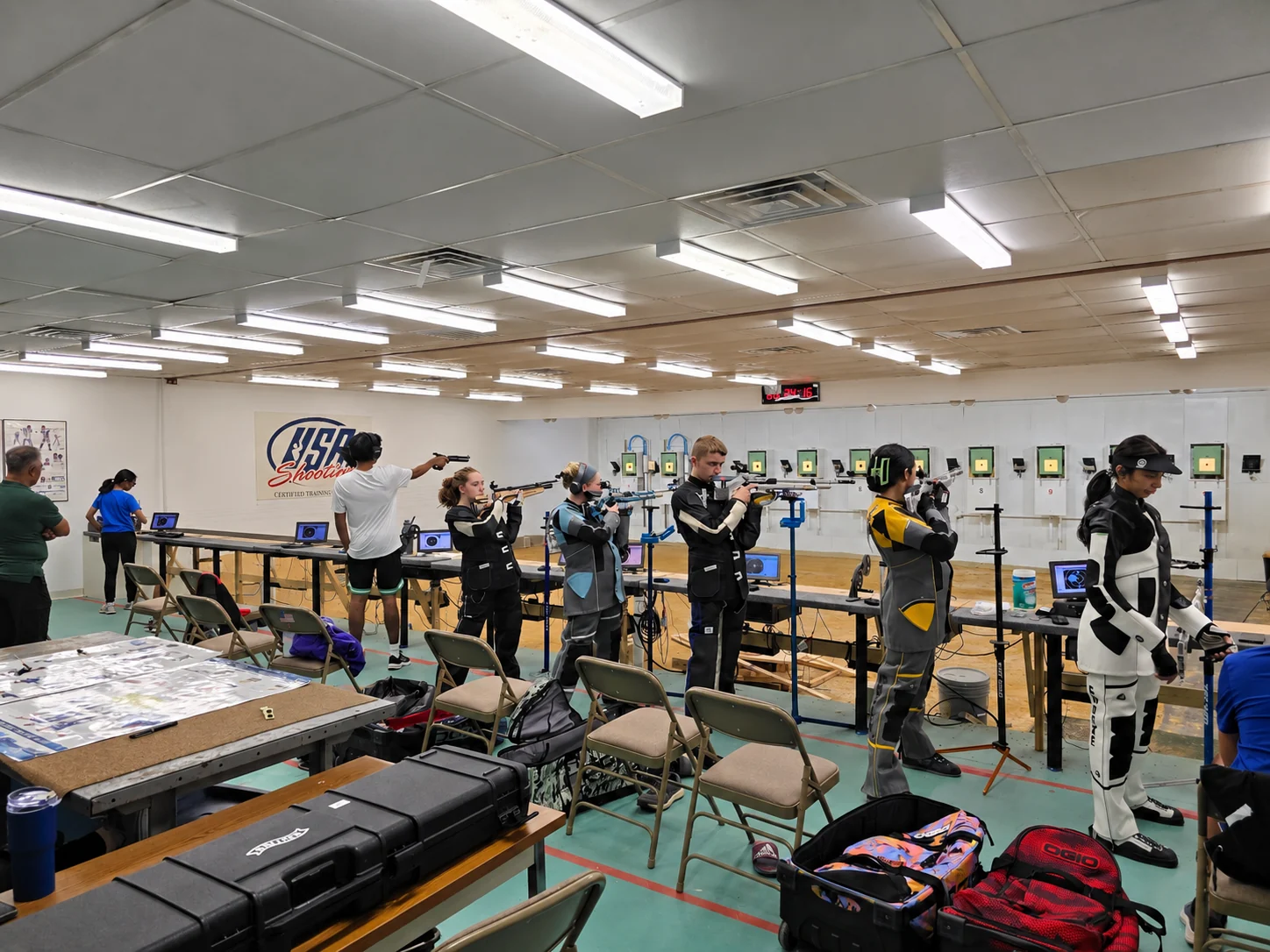
The athlete and coach can then choose one meaningful correction, test it deliberately, record what happened and return to the learning cycle.
THE JOURNAL
Reflection becomes more useful when it is specific.
Athlete journals help connect coaching, practice and competition. Depending on the athlete and discipline, useful entries can include goals, technical observations, equipment settings, questions, coach feedback, corrections that were tested, practice results and competition notes.
The point is not paperwork or collecting scores. It is to help the athlete remember what mattered, recognize patterns and arrive at the next practice with a clearer idea of what to work on.
Athlete Development resourcesPREPARING TO COMPETE
Competition preparation is a skill of its own.
Practice, a local match and a national tournament place different demands on an athlete. Preparation should reflect that.
As athletes advance, they learn to confirm equipment and current event requirements, organize the firing point, verify settings and position, use preparation time deliberately and begin a match with a clear plan.
They also learn what to do when a shot or series goes wrong: recognize the problem without dramatizing it, regain attention, make a practical correction when one is warranted and keep one mistake from shaping the rest of the match. Afterward, they record what happened while the details are still clear and decide what belongs back in training.
Competition resourcesA LONGER VIEW OF PROGRESS
Development is easier to see across time.
This sequence is included to show the time scale of athlete development, not to make one athlete the story of the academy.
The first photograph is an introduction, not a coaching relationship. Arjun was very young and had accompanied Dr Amol Khedgikar to the range while Dr Amol was an active rifle athlete competing nationally and representing Texas. Dave Schaller allowed him to try a pistol that day.
Arjun’s later development was coached by Mayura Jahagirdar and Dr Amol Khedgikar. The next photograph was taken at his first Junior Olympics in Colorado Springs. Three years later, he returned to the same USA Shooting podium after earning a national-level medal.
The medals are milestones. The development between them is the larger story.
LONGER-TERM DEVELOPMENT
ORIENT → DEVELOP → PREPARE → COMPETE → REFLECT → LEAD
Orient
Safety, expectations and fundamentals.
Develop
Technical ability, good habits and increasing consistency.
Prepare
Training plans, routines and responsibility for readiness.
Compete
Apply the work in a real match environment.
Reflect
Learn from the result and the process that produced it.
Lead
Support teammates and help the athlete coming behind you.
WHAT PROGRESS LOOKS LIKE
More than a higher score.
Progress can include better technical execution, greater consistency, stronger preparation, better decisions under pressure, more honest reflection, increased independence and the ability to support teammates.
Precision shooting also gives athletes repeated opportunities to practice concentration, goal setting, emotional control, resilience, personal responsibility, respect and leadership through service. Those qualities are developed deliberately; they are not automatic outcomes of participation.